
Parashat Re’eh 5786-8 August 2026 / 25 Av 5786 Beit Yisrael International
Parashat Re’eh 5786-8 August 2026 / 25 Av 5786 Beit Yisrael International

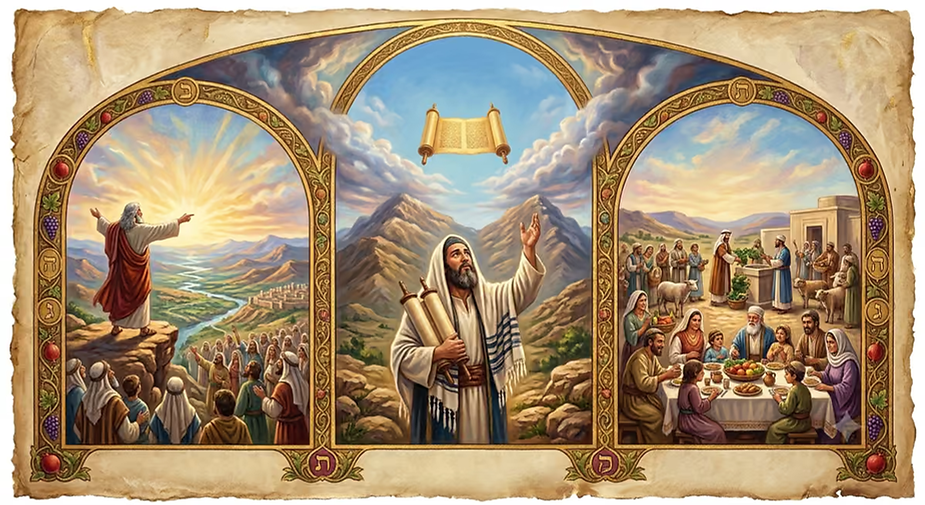
Re’eh: The Covenant of Vision, Obedience, and Compassion
Parashat Re’eh—“See”—is far more than a collection of laws preparing Israel to enter the Promised Land. It presents a spiritual vision for building a holy society: a nation must learn to see clearly, choose faithfully, worship the One Creator without compromise, sanctify material life, and care for the vulnerable.
“See, I set before you today a blessing and a curse.”
—Deuteronomy 11:26
1. Re’eh—Spiritual Sight and Personal Responsibility
The Torah begins with the singular word See — Re’eh, “See,” although Moses is addressing the entire nation. Jewish commentators understand this as a personal call: every individual must see the path before them and take responsibility for their choices.
The blessing and the curse are not merely distant rewards and punishments. They are two spiritual directions placed before a person “today.” Each day presents a fresh opportunity to choose covenantal faithfulness.
The Torah first says “see” and then speaks of listening to the commandments. This teaches that Torah must not remain abstract information. A person should perceive its truth so clearly that obedience becomes as certain as something seen with one’s own eyes. Chassidic teaching distinguishes intellectual belief from spiritual sight: what a person merely hears may still be questioned, but what is truly “seen” becomes deeply established within the soul.
Thus, Re’eh teaches:
Blessing begins when the eyes of the soul recognise that the mitzvot are themselves the path of life.
2. Blessing Is Found Within Obedience
The verse does not merely say that blessing will come after Israel listens. It describes the blessing in connection with listening itself:
“The blessing, that you listen to the commandments of HaShem.”
The deepest blessing is not simply prosperity, success or comfort. It is the privilege of becoming aligned with the will of the Creator. When the human will and the Divine will move together, life gains direction, order and holiness.
Conversely, the curse begins when one “turns away from the path.” Spiritual decline rarely begins with open rebellion. It often begins with a small departure—a person allows desire, pride, fear or social pressure to move them slightly away from the Torah’s path. Re’eh therefore calls Israel to examine not only its destination but also the direction in which it is walking.
3. Destroying Idolatry—Removing False Authorities
Upon entering the Land, Israel is commanded to destroy the places and instruments of idolatrous worship. This command establishes that the Land of Israel must not merely change political ownership; it must undergo spiritual purification.
Idolatry is more than bowing to a physical image. At its root, it means assigning independent power to something other than the One Creator. Wealth, political power, personality, ideology, nature or personal desire can become forms of inward idolatry when they are treated as ultimate authorities.
The Torah commands Israel not to imitate the surrounding nations in worship. Even sincere religious emotion cannot justify a form of worship that the Torah has forbidden. Holiness is therefore not defined by human enthusiasm alone, but by loyalty to HaShem’s revealed will.
The destruction of idolatry also carries an inward lesson:
Before constructing a sanctuary for HaShem, one must remove the competing altars within the heart.
Pride, uncontrolled desire, dependence on human approval and the glorification of created things must be uprooted so that the heart can become a dwelling place for the Divine Presence.
4. “The Place HaShem Will Choose”—Unity of Worship
Re’eh repeatedly speaks of “the place that HaShem will choose to cause His Name to dwell there.” Israel was forbidden to establish independent sacrificial centres according to individual preference. Offerings were to be brought to the one chosen place, ultimately identified with the Beit HaMikdash in Jerusalem.
This principle teaches that genuine worship must possess both:
Inner sincerity
Covenantal order
A person cannot say, “I will worship the Creator entirely according to my own ideas.” Torah directs worship toward a divinely chosen centre. The central sanctuary united the tribes, prevented spiritual fragmentation and reminded Israel that all worship belongs to the One God.
The pilgrimage festivals further transformed Jerusalem into a meeting point for the whole nation. Different tribes, families and social classes stood before HaShem together. The chosen place therefore represents not only sacred geography but also the unity of Israel under the sovereignty of Heaven.
5. Kashrut—Sanctifying Appetite
The dietary laws in Re’eh teach that holiness enters even the most ordinary act of eating. Torah does not reject the physical world; it disciplines and elevates it.
Eating can be driven merely by appetite, or it can become an act performed with restraint, gratitude and awareness of the Creator. Kashrut trains a person to ask:
“Is this permitted?” before asking, “Do I desire it?”
This transforms appetite into service. A holy person is not someone without physical desires, but someone whose desires are governed by Torah.
The prohibition against consuming blood reinforces reverence for life. The Torah repeatedly associates blood with the life-force and commands that it not be treated as ordinary food. Re’eh therefore teaches that even permitted consumption must be bounded by respect, discipline and compassion.
6. Tithes—Recognising the True Owner
The laws of tithing confront the illusion that human beings are absolute owners of their possessions. Israel may cultivate the land, gather the harvest and enjoy its produce, but a portion must be separated for sacred purposes, the Levite and those in need.
Tithing teaches that material blessing carries responsibility. Wealth is not merely a private achievement; it is a trust placed in human hands.
By bringing the tithe before HaShem, the Israelite learns that economic life and spiritual life cannot be separated. The field, harvest, marketplace and dining table must all acknowledge the sovereignty of the Creator.
The purpose is not to despise material prosperity, but to prevent prosperity from becoming an idol. When wealth is shared and sanctified, it becomes a vessel for blessing.
7. Tzedakah—Opening the Hand and the Heart
Re’eh commands:
“You shall surely open your hand to your brother, to your poor and to your needy in your land.”
—Deuteronomy 15:11
The doubled expression Open, open. — patoach tiftach, “you shall surely open,” suggests continuous generosity. A hand may need to be opened repeatedly because fear and self-interest continually try to close it.
The Torah first warns, “Do not harden your heart,” and then says, “Do not close your hand.” This order is significant. The closed hand begins with a closed heart. Tzedakah therefore repairs both the recipient’s material need and the giver’s inner character.
Rambam codifies giving to the poor as a positive commandment based on these verses and teaches that one must not turn away a needy person empty-handed. Jewish tradition also emphasises preserving the dignity of the recipient, making assistance an act of justice and compassion rather than humiliation.
The Hebrew word tzedakah is related to tzedek—justice. Supporting the poor is therefore not merely optional kindness. It is part of restoring proper balance within the covenantal community.
8. Shemittah—Freedom from Economic Bondage
The remission of debts during the Sabbatical year teaches that society must not allow financial obligation to become permanent human bondage.
Shemittah declares that economic systems are not absolute. Property, labour and debt remain under the authority of HaShem. The prosperous are called to release control, while those in hardship are given the possibility of renewal.
The Torah warns people not to refuse a loan merely because the year of debt release is approaching. This reveals the inner test of faith: will a person obey HaShem even when generosity appears financially risky?
Shemittah therefore produces:
Humility in the wealthy
Hope for the poor
Restraint in the creditor
Trust in HaShem for the entire society
The land, the economy and the human heart must all learn to rest under Divine ownership.
9. The Festivals—Joy Before HaShem
Re’eh concludes with the pilgrimage festivals: Pesach, Shavuot and Sukkot. Israel is commanded to appear before HaShem and not come empty-handed.
These festivals sanctify memory, agriculture and time:
Pesach remembers liberation.
Shavuot celebrates the harvest and covenantal responsibility.
Sukkot gathers the produce in joy while remembering dependence upon Divine protection.
The Torah repeatedly connects festival joy with including the Levite, stranger, orphan and widow. This teaches that sacred joy cannot be selfish. Celebration is incomplete when the vulnerable are excluded.
True simchah expands the heart. The closer a person comes to HaShem, the more room they make for others.
10. One Unifying Message
At first glance, destroying idolatry, centralising worship, observing kashrut, giving tithes, releasing debts, helping the poor and celebrating festivals may appear to be separate subjects. Yet all share one central message:
Everything belongs to HaShem.
Worship belongs to HaShem alone.
The Land belongs to HaShem.
The sanctuary is chosen by HaShem.
Food is governed by HaShem’s instruction.
Wealth is entrusted by HaShem.
Time is sanctified by HaShem.
Israel’s joy is experienced before HaShem.
Re’eh prepares Israel to enter the Land by teaching that possessing the Land must never become spiritual independence from its true Owner.
Gaddi Efraim Notes
Parashat Re’eh calls the whole House of Israel to recover spiritual vision. The Torah does not merely say, “Believe”; it says, “See.” We must learn to see the difference between Torah and human invention, between holiness and religious emotion, and between worship of the One Creator and subtle forms of — avodah zarah.
Before Israel can build the chosen dwelling place, the altars of false worship must be removed. This applies both to the Land and to the human heart. Every image, ideology, personality or institution that takes the place belonging to HaShem must be brought under the authority of Torah.
The chosen place teaches that the tribes are not called to create competing religions. Yehudah, Yosef and the whole House of Israel are called toward one Creator, one Torah and a unified worship centred upon the Name of HaShem. Diversity among the tribes must not become division in the worship of the Creator.
Re’eh also reveals that spiritual purity cannot be separated from compassion. A person who rejects physical idols but closes the heart to the poor has not yet completed the work of purification. The hand opened in tzedakah becomes like a vessel through which Divine kindness enters the world.
The Torah therefore joins right worship with right living. Kashrut sanctifies the body, tithing sanctifies possessions, Shemittah sanctifies the economy, the festivals sanctify time, and the chosen sanctuary sanctifies the collective worship of Israel.
The message for Ephraim and the nations drawing near to the light of Torah is clear: approach the One Creator with humility, reject — avodah zarah, honour the Torah given to Israel, respect Jewish halachic boundaries and learn the way of righteousness without replacing or opposing Am Yisrael.
The ultimate blessing of Re’eh is the restoration of clear vision—when the whole House of Israel recognises HaShem as the only source of life, walks in covenantal faithfulness and becomes a light through which the nations may learn justice, compassion and reverence for the One Creator.
Conclusion
Parashat Re’eh teaches that blessing is not discovered through uncontrolled freedom but through sanctified choice. Israel is called to see clearly, remove false worship, gather around the place chosen by HaShem, discipline appetite, share material blessing and rejoice as one covenantal people.
When the eye sees the truth, the ear listens to Torah, the heart rejects idolatry and the hand opens to the needy, the path of blessing becomes visible.
— Beit Yisrael International – Gaddi Efrayim Notes
Join now to make new friends, create groups, add photos, and much more.
The House of Ephraim
All the Lost Sheep from the House of Yisrael
Coming to unity with the House of Judah by fulfilling:
The Covenant of Peace
Jeremiah 31: 30-33
30Behold, days are coming, says the Lord, and I will form a covenant with the house of Israel and with the house of Judah, a new covenant. להִנֵּ֛ה יָמִ֥ים בָּאִ֖ים נְאֻם־יְהֹוָ֑ה וְכָֽרַתִּ֗י אֶת־בֵּ֧ית יִשְׂרָאֵ֛ל וְאֶת־בֵּ֥ית יְהוּדָ֖ה בְּרִ֥ית חֲדָשָֽׁה: 31Not like the covenant that I formed with their forefathers on the day I took them by the hand to take them out of the land of Egypt, that they broke My covenant, although I was a lord over them, says the Lord. לאלֹ֣א כַבְּרִ֗ית אֲשֶׁ֚ר כָּרַ֙תִּי֙ אֶת־אֲבוֹתָ֔ם בְּיוֹם֙ הֶֽחֱזִיקִ֣י בְיָדָ֔ם לְהֽוֹצִיאָ֖ם מֵאֶ֖רֶץ מִצְרָ֑יִם אֲשֶׁר־הֵ֜מָּה הֵפֵ֣רוּ אֶת־בְּרִיתִ֗י וְאָֽנֹכִ֛י בָּעַ֥לְתִּי בָ֖ם נְאֻם־יְהֹוָֽה: 32For this is the covenant that I will form with the house of Israel after those days, says the Lord: I will place My law in their midst and I will inscribe it upon their hearts, and I will be their God and they shall be My people. לבכִּ֣י זֹ֣את הַבְּרִ֡ית אֲשֶׁ֣ר אֶכְרֹת֩ אֶת־בֵּ֨ית יִשְׂרָאֵ֜ל אַֽחֲרֵ֨י הַיָּמִ֚ים הָהֵם֙ נְאֻם־יְהֹוָ֔ה נָתַ֚תִּי אֶת־תּֽוֹרָתִי֙ בְּקִרְבָּ֔ם וְעַל־לִבָּ֖ם אֶכְתֳּבֶ֑נָּה וְהָיִ֚יתִי לָהֶם֙ לֵֽאלֹהִ֔ים וְהֵ֖מָּה יִֽהְיוּ־לִ֥י לְעָֽם: 33And no longer shall one teach his neighbor or [shall] one [teach] his brother, saying, "Know the Lord," for they shall all know Me from their smallest to their greatest, says the Lord, for I will forgive their iniquity and their sin I will no longer remember. לגוְלֹ֧א יְלַמְּד֣וּ ע֗וֹד אִ֣ישׁ אֶת־רֵעֵ֜הוּ וְאִ֚ישׁ אֶת־אָחִיו֙ לֵאמֹ֔ר דְּע֖וּ אֶת־יְהֹוָ֑ה כִּֽי־כוּלָּם֩ יֵֽדְע֨וּ אוֹתִ֜י לְמִקְּטַנָּ֚ם וְעַד־גְּדוֹלָם֙ נְאֻם־יְהֹוָ֔ה כִּ֚י אֶסְלַח֙ לַֽעֲוֹנָ֔ם וּלְחַטָּאתָ֖ם לֹ֥א אֶזְכָּר־עֽוֹד:

לְכ֣וּ | וְנַֽעֲלֶ֣ה אֶל־הַר־יְהֹוָ֗ה אֶל־בֵּית֙ אֱלֹהֵ֣י יַֽעֲקֹ֔ב וְיֹרֵ֙נוּ֙ מִדְּרָכָ֔יו וְנֵֽלְכָ֖ה בְּאֹֽרְחֹתָ֑יו כִּ֚י מִצִּיּוֹן֙ תֵּצֵ֣א תוֹרָ֔ה וּדְבַר־יְהֹוָ֖ה מִירֽוּשָׁלִָֽם
"Come, let us go up to the Lord's mount, to the house of the God of Jacob, and let Him teach us of His ways, and we will go in His paths," for out of Zion shall the Torah come forth, and the word of the Lord from Jerusalem.
Submission to the Head Council of Ephraim
When we speak about the “Head Council of the House of Ephraim,” we are referring to a council whose deepest desire is to come fully under the authority and guidance of a recognized Orthodox Jewish Beit Din or Sanhedrin. In all matters—especially those concerning Halachic decisions related to the Jewish people, Am Yisrael—the Head Council seeks to act with humility, submission, and respect toward the established Torah authority of Israel.
Like I (Ariel) was 'born' on the Har HaBayit so.......,
Beit Yisrael International is 'born' on the Har HaBayit and desire to grow up further in unity with the Jewish People.........
Beit Yisrael International special for all The Lost Sheep from the House of Israel, Lost Jews or Lost Tribes, Hashem Loves you it is He, He want to 'resurrect' you close by His House...... In 'front', before His House....... Calling out to you:
Isaiah 55:1
1Ho! All who thirst, go to water, and whoever has no money, go, buy and eat, and go, buy without money and without a price, wine and milk. אה֚וֹי כָּל־צָמֵא֙ לְכ֣וּ לַמַּ֔יִם וַֽאֲשֶׁ֥ר אֵין־ל֖וֹ כָּ֑סֶף לְכ֚וּ שִׁבְרוּ֙ וֶֽאֱכֹ֔לוּ וּלְכ֣וּ שִׁבְר֗וּ בְּלוֹא־כֶ֛סֶף וּבְל֥וֹא מְחִ֖יר יַ֥יִן וְחָלָֽב: Ho! All who thirst. Heb. הוֹי. This word הוֹי is an expression of calling, inviting, and gathering, and there are many in Scripture, [e. g.,] (Zech. 2:10) “Ho! Ho! and flee from the north land.” הוי כל צמא. הוי זה ל' קריאה וזימון וקיבוץ הוא ויש הרבה במקרא (זכריה ב) הוי הוי ונוסו מארץ צפון:go to water. to Torah. לכו למים. לתורה:buy. Heb. שִׁבְרוּ. Comp. (Gen. 42:3) “To buy (לִשְׁבֹּר) corn,” buy. שברו. ל' לשבור בר (בראשית מב) קנו:wine and milk. Teaching better than wine and milk. יין וחלב. לקח טוב מיין וחלב:
Join now to make new friends, create groups, add photos, and much more.
Join now to make new friends, create groups, add photos, and much more.
The House of Ephraim
All the Lost Sheep from the House of Yisrael
Coming to unity with the House of Judah by fulfilling:
The Covenant of Peace
Jeremiah 31: 30-33
| 30Behold, days are coming, says the Lord, and I will form a covenant with the house of Israel and with the house of Judah, a new covenant. | להִנֵּ֛ה יָמִ֥ים בָּאִ֖ים נְאֻם־יְהֹוָ֑ה וְכָֽרַתִּ֗י אֶת־בֵּ֧ית יִשְׂרָאֵ֛ל וְאֶת־בֵּ֥ית יְהוּדָ֖ה בְּרִ֥ית חֲדָשָֽׁה: | |
| 31Not like the covenant that I formed with their forefathers on the day I took them by the hand to take them out of the land of Egypt, that they broke My covenant, although I was a lord over them, says the Lord. | לאלֹ֣א כַבְּרִ֗ית אֲשֶׁ֚ר כָּרַ֙תִּי֙ אֶת־אֲבוֹתָ֔ם בְּיוֹם֙ הֶֽחֱזִיקִ֣י בְיָדָ֔ם לְהֽוֹצִיאָ֖ם מֵאֶ֖רֶץ מִצְרָ֑יִם אֲשֶׁר־הֵ֜מָּה הֵפֵ֣רוּ אֶת־בְּרִיתִ֗י וְאָֽנֹכִ֛י בָּעַ֥לְתִּי בָ֖ם נְאֻם־יְהֹוָֽה: | |
| 32For this is the covenant that I will form with the house of Israel after those days, says the Lord: I will place My law in their midst and I will inscribe it upon their hearts, and I will be their God and they shall be My people. | לבכִּ֣י זֹ֣את הַבְּרִ֡ית אֲשֶׁ֣ר אֶכְרֹת֩ אֶת־בֵּ֨ית יִשְׂרָאֵ֜ל אַֽחֲרֵ֨י הַיָּמִ֚ים הָהֵם֙ נְאֻם־יְהֹוָ֔ה נָתַ֚תִּי אֶת־תּֽוֹרָתִי֙ בְּקִרְבָּ֔ם וְעַל־לִבָּ֖ם אֶכְתֳּבֶ֑נָּה וְהָיִ֚יתִי לָהֶם֙ לֵֽאלֹהִ֔ים וְהֵ֖מָּה יִֽהְיוּ־לִ֥י לְעָֽם: | |
| 33And no longer shall one teach his neighbor or [shall] one [teach] his brother, saying, "Know the Lord," for they shall all know Me from their smallest to their greatest, says the Lord, for I will forgive their iniquity and their sin I will no longer remember. | לגוְלֹ֧א יְלַמְּד֣וּ ע֗וֹד אִ֣ישׁ אֶת־רֵעֵ֜הוּ וְאִ֚ישׁ אֶת־אָחִיו֙ לֵאמֹ֔ר דְּע֖וּ אֶת־יְהֹוָ֑ה כִּֽי־כוּלָּם֩ יֵֽדְע֨וּ אוֹתִ֜י לְמִקְּטַנָּ֚ם וְעַד־גְּדוֹלָם֙ נְאֻם־יְהֹוָ֔ה כִּ֚י אֶסְלַח֙ לַֽעֲוֹנָ֔ם וּלְחַטָּאתָ֖ם לֹ֥א אֶזְכָּר־עֽוֹד: |
Submission to the Head Council of Ephraim
When we speak about the “Head Council of the House of Ephraim,” we are referring to a council whose deepest desire is to come fully under the authority and guidance of a recognized Orthodox Jewish Beit Din or Sanhedrin. In all matters—especially those concerning Halachic decisions related to the Jewish people, Am Yisrael—the Head Council seeks to act with humility, submission, and respect toward the established Torah authority of Israel.
Like I (Ariel) was 'born' on the Har HaBayit so.......,
Beit Yisrael International is 'born' on the Har HaBayit and desire to grow up further in unity with the Jewish People.........
Beit Yisrael International special for all The Lost Sheep from the House of Israel, Lost Jews or Lost Tribes, Hashem Loves you it is He, He want to 'resurrect' you close by His House...... In 'front', before His House....... Calling out to you:
Isaiah 55:1
| 1Ho! All who thirst, go to water, and whoever has no money, go, buy and eat, and go, buy without money and without a price, wine and milk. | אה֚וֹי כָּל־צָמֵא֙ לְכ֣וּ לַמַּ֔יִם וַֽאֲשֶׁ֥ר אֵין־ל֖וֹ כָּ֑סֶף לְכ֚וּ שִׁבְרוּ֙ וֶֽאֱכֹ֔לוּ וּלְכ֣וּ שִׁבְר֗וּ בְּלוֹא־כֶ֛סֶף וּבְל֥וֹא מְחִ֖יר יַ֥יִן וְחָלָֽב: | |
Join now to make new friends, create groups, add photos, and much more.

PS. Everyone can join! Special I ask, Jewish Torah Teachers with an 'Shlita' from the head Rabbinate in Jerusalem to join? For teaching Torah to Ephraim. Like they do on Facebook. Infect all Jews who love to welcome all of Ephraim into the State Of Yisrael for nothing more than the unification of Yehudah and Ephraim under the 'Scepter of Yehudah'.
PS. Everyone can join! Special I ask, Jewish Torah Teachers with an 'Shlita' from the head Rabbinate in Jerusalem to join? For teaching Torah to Ephraim. Like they do on Facebook. Infect all Jews who love to welcome all of Ephraim into the State Of Yisrael for nothing more than the unification of Yehudah and Ephraim under the 'Scepter of Yehudah'.
Blessings
Bet Yisrael International (Jewish Orthodox Ephraimites) From Gaddi and Ariel, Many Blessings to all the ShneymAsarHaShevatim (Twelve Tribes) in the Golus, Shalom!

I do this work on a volunteer basis, out of Love for the Lost Sheep from the House of Yisrael. I was born as a Lost Sheep from the House of Yisrael...... But HaShem brought me home (more than 30 years back) as one who is born of Zion......
Tehillim (Psalms) - Chapter 87
6[When] the Lord counts in the script of the peoples forever, [He will say,] "This one was born there."
Rashi:
The Lord counts in the script of the peoples, “This one, etc.”. This is a transposed verse, and סלה, forever, which is said at the end, refers to the beginning: When the Lord counts in the script of the peoples forever. That means that in the future, when the Holy One, blessed be He, inscribes the nations for an abhorrence, He will count the Israelites who are assimilated among them and those who were coerced [to abandon Judaism] among them and extract them from their midst, and [He shall] say, “This one was born of those of Zion,” and He will choose them for Himself. This is what Isaiah says (66:21): “And from them, too, will I take for priests and for Levites.” From the nations bringing them for tribute, I shall take those assimilated among them. And there will be among them priests and Levites who are unrecognizable, but they are revealed to Me, says the Lord. Now where did He say it? (Deut. 29:28) “The secret things belong to the Lord, our God.”
Together, I and Gaddi from India, we trying gathering in ALL of Lost Tribes of Israel who have the intense desire to come home, united with Judah, under rabbinical supervision.......
Donations, support for our work are very welcome, to hold on the website and the funds that I like to create, arranges for Beit Yisrael International:
1. The Kohanim of every group (we are starting in India) are learning Parsha Hashevuah, Shulchan Aruch and Mishnah Torah (Rambam) on a weekly base via Video Calls by me. What they (the Kohanim) need to teach to everyone in their communities. As it was originally under Am Yisrael.
2. Starting to learn Hebrew. Following free 'online' courses. They are in need for a good Ulpan.
3. The first group had teaching the of the Shulchan Aruch for more than one year from an Israeli Jewish Orthodox Rabbi. Who gives now on a weekly basis Torah Studies (in general) to the leaders of the different associated groups with Beit Yisrael International through video calls.
4. Soon we start to ask more Rabbis that they can give Torah Studies to the leaders of the different associated groups with Beit Yisrael International through video calls.
5. In India, in general the people are very poor...... The first things what they need are:
Tallitot, Tefillin and Prayer Books..... For their way back home, Eretz Yisrael, to start to live their Jewish Lives complete in unity with the Jewish people.
Click:
If you are interested in helping Beit Yisrael International (Jewish Orthodox Ephraimites), it is a non-profit organization, with one of the above, please contact me.
Contact me, Ariel your Representee, Representee of Ephraim and adviser (not a rabbi but friendly adviser) of Bet Yisrael international (Jewish Orthodox Ephraimites) on the Har HaBayit: WhatsApp +972 54-568-3031, For all your questions about Beit Yisrael International. We can talk about it; come, let's make an appointment.
A Ba’al Teshuva in the House of Ephraim, Membership Requirements
A Ba’al Teshuva in the House of Ephraim,
Membership Requirements

A Ba’al Teshuva in the House of Ephraim,
Membership Requirements
Beit Yisrael International ‘how to become a member’ by: Ariel your Representee, Representee of Ephraim (Jewish Orthodox), Chavruta (Brother in Torah) with Ephraim and adviser (not a rabbi but friendly adviser) for Bet Yisrael international (Jewish Orthodox Ephraimites) on the Har HaBayit,
And: Gaddi Ephraim President (Righteous of the Nations (Ultra-Orthodox Chassidic/Lost Tribe: Gad.) Beit Yisrael International.
Beit Yisrael International ‘how to become a member’ by: Ariel your Representee, Representee of Ephraim (Jewish Orthodox), Chavruta (Brother in Torah) with Ephraim and adviser (not a rabbi but friendly adviser) for Bet Yisrael international (Jewish Orthodox Ephraimites) on the Har HaBayit,
And: Gaddi Ephraim President (Righteous of the Nations (Ultra-Orthodox Chassidic/Lost Tribe: Gad.) Beit Yisrael International.
Beit Yisrael International,
Get the MemberShip from Beit Yisrael! 'How to become a Righteous of the Nations (Ultra-Orthodox Chassidic/Lost Tribes of Efrayim: Israelite by accepting the Shulchan Aruch and Chasidut, the teachings of CHaBaD, hearing and doing.)
A Ba’al Teshuva in the House of Ephraim,
Membership Requirements
Get the MemberShip from Beit Yisrael! 'How to become a Righteous of the Nations (Ultra-Orthodox Chassidic/Lost Tribes of Efrayim: Israelite by accepting the Shulchan Aruch and Chasidut, the teachings of CHaBaD, hearing and doing.)
A Ba’al Teshuva in the House of Ephraim,
Membership Requirements
Join a Jewish Torah Community
The applicant must become actively involved in a Jewish Orthodox community, or a community progressing toward Orthodox Jewish observance, within their local area.
The primary purpose is:
- To find a Havruta (Torah study partner)
- To study Torah consistently
- To grow spiritually through Teshuva and observance
Torah Study and Community Participation
The applicant must become actively involved in a Jewish Orthodox community, or a community progressing toward Orthodox Jewish observance, within their local area.
The primary purpose is:
- To find a Havruta (Torah study partner)
- To study Torah consistently
- To grow spiritually through Teshuva and observance
Torah Study and Community Participation
The applicant is expected to:
- Attend and participate in the local Jewish Orthodox community regularly
- Be a devoted member of the community for a minimum of one year
- Participate in community Shabbat gatherings, festivals, and torah events
- Study Torah according to Jewish Halacha
- Learn to read Torah and Hebrew
- Study with a Jewish Orthodox Havruta for at least:
- Two hours per week
- For a minimum period of one year
- Follow and learn from Gaddi’s Torah Studies available in multiple languages
Declaration and Spiritual Acknowledgment
- Attend and participate in the local Jewish Orthodox community regularly
- Be a devoted member of the community for a minimum of one year
- Participate in community Shabbat gatherings, festivals, and torah events
- Study Torah according to Jewish Halacha
- Learn to read Torah and Hebrew
- Study with a Jewish Orthodox Havruta for at least:
- Two hours per week
- For a minimum period of one year
- Follow and learn from Gaddi’s Torah Studies available in multiple languages
Declaration and Spiritual Acknowledgment
At the point of formal application, the prospective member signs a declaration acknowledging:
- The historical separation of the Kingdom of Israel under Yeravam
- Recognition of the spiritual errors associated with idolatry and separation from Jerusalem and the House of David
- A desire for repentance and reconciliation with the Jewish people
- Commitment to observe the mitzvot and Torah commandments
- A sincere wish to come under the “Scepter of Yehudah”
- Hope to eventually stand before the Jewish Rabbinate in Jerusalem in unity and confession (asking for forgiveness for the sins of our forefathers, ourselves, before HaShem and the Jewish people) before the Jewish people
Testimonies and Recommendations
- The historical separation of the Kingdom of Israel under Yeravam
- Recognition of the spiritual errors associated with idolatry and separation from Jerusalem and the House of David
- A desire for repentance and reconciliation with the Jewish people
- Commitment to observe the mitzvot and Torah commandments
- A sincere wish to come under the “Scepter of Yehudah”
- Hope to eventually stand before the Jewish Rabbinate in Jerusalem in unity and confession (asking for forgiveness for the sins of our forefathers, ourselves, before HaShem and the Jewish people) before the Jewish people
Testimonies and Recommendations
After completing the required study and community participation period, the applicant must submit:
Required Testimonies
- A testimony from the Jewish Orthodox Havruta describing:
- The applicant’s conduct
- Torah commitment
- lifestyle and spiritual growth
- Two additional testimonies from respected members of the local community
These testimonies should confirm that the applicant is living as a righteous and Torah-observant individual committed to:
- Shulchan Aruch
- Chassidut
- Teachings of Chabad-Lubavitch
- Study of the Tanya
- Torah observance through hearing and doing
Required Testimonies
- A testimony from the Jewish Orthodox Havruta describing:
- The applicant’s conduct
- Torah commitment
- lifestyle and spiritual growth
- Two additional testimonies from respected members of the local community
These testimonies should confirm that the applicant is living as a righteous and Torah-observant individual committed to:
- Shulchan Aruch
- Chassidut
- Teachings of Chabad-Lubavitch
- Study of the Tanya
- Torah observance through hearing and doing
Submission to the Head Counsel of Ephraim
The following documents must be submitted to the:
Head Counsel of Ephraim
Required submissions include:
- Personal application request
- Three testimonies
- Request for acceptance into the international House of Ephraim community
The following documents must be submitted to the:
Head Counsel of Ephraim
Required submissions include:
- Personal application request
- Three testimonies
- Request for acceptance into the international House of Ephraim community
Submission to the Head Council of Ephraim
When we speak about the “Head Council of the House of Ephraim,” we are referring to a council whose deepest desire is to come fully under the authority and guidance of a recognized Orthodox Jewish Beit Din or Sanhedrin. In all matters—especially those concerning Halachic decisions related to the Jewish people, Am Yisrael—the Head Council seeks to act with humility, submission, and respect toward the established Torah authority of Israel.
|
Interview and Acceptance Process
If the application is approved:
- The applicant will appear before the Head Counsel of Ephraim through a video interview
- Upon acceptance, the applicant must:
- Sign the Ephraim Membership Contract
- Undergo a Mikvah immersion immediately afterward
If the application is approved:
- The applicant will appear before the Head Counsel of Ephraim through a video interview
- Upon acceptance, the applicant must:
- Sign the Ephraim Membership Contract
- Undergo a Mikvah immersion immediately afterward
Community Applications
Non-Jewish communities seeking to transition toward Jewish Orthodox observance and become affiliated with the House of Ephraim through Beit Yisrael International are instructed to establish communication with Gaddi or Ariel for guidance and further process.
Non-Jewish communities seeking to transition toward Jewish Orthodox observance and become affiliated with the House of Ephraim through Beit Yisrael International are instructed to establish communication with Gaddi or Ariel for guidance and further process.
Special Note for Individuals of Jewish Descent
Individuals identified as “Lost Jews” may be required to sign a separate contract. Membership under this category is only considered when it is not possible for the individual to be formally accepted as Jewish through a recognized Jewish Bet Din.
Individuals identified as “Lost Jews” may be required to sign a separate contract. Membership under this category is only considered when it is not possible for the individual to be formally accepted as Jewish through a recognized Jewish Bet Din.
Core Principles of Membership
With the above in mind, I Love to bless you with the following:


Beit Yisrael International.
Become a member,
Get the MemberShip from Beit Yisrael! ‘How to become a Righteous of the Nations, Jewish Orthodox Chassidic Ephraimite.
click: Beit yisrael international
For further information you can make an appointment:

Ariel van Kessel Representative (Jewish Orthodox) Beit Yisrael International
Get the MemberShip from Beit Yisrael! ‘How to become a Righteous of the Nations, Jewish Orthodox Chassidic Ephraimite.
click: Beit yisrael international

Ariel van Kessel Representative (Jewish Orthodox) Beit Yisrael International
WhatsApp: +972 54-568-3031
Ariel Representative of Ephraim
Comments
Post a Comment